AOS™
Execution with Structure. Expertise with Purpose.
Averroa Operating System™ is the engine behind everything we deliver. It fuses two proprietary frameworks — DRIVE™ and ORBIT™ — into a cohesive system that transforms strategy into measurable execution.
DRIVE™ is the rhythm: a five-phase loop (Design → Run → Improve → Validate → Expand) that structures every engagement into a clear, feedback-driven journey. It brings discipline, speed, and adaptability to even the most complex programs.
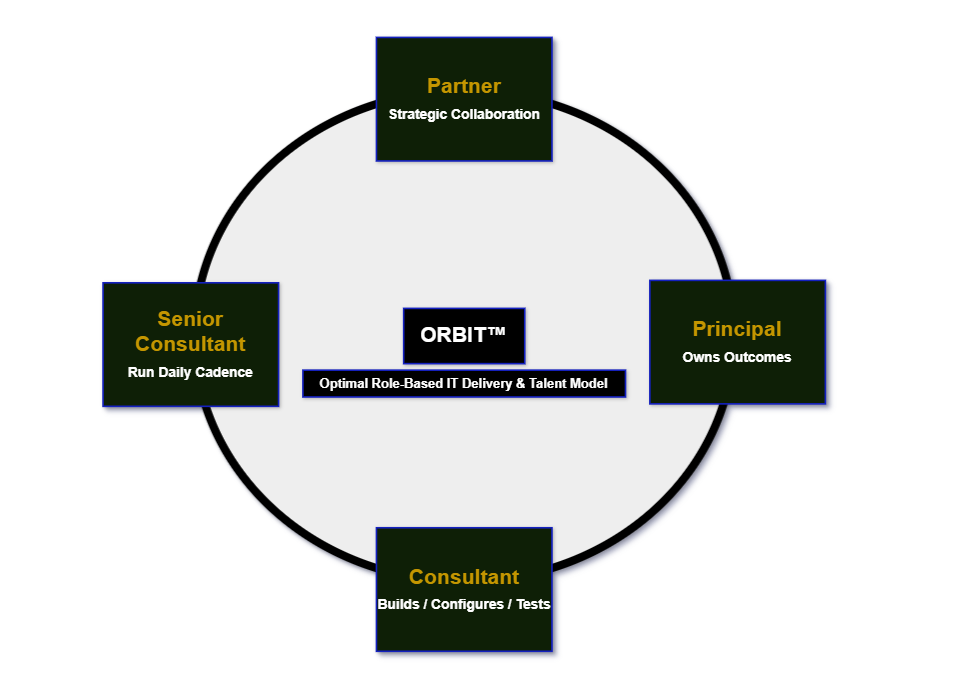
ORBIT™ is the machine: a structured, tiered model of senior experts and full-time consultants who execute each phase with precision. Every role is mapped to where it creates the most impact — from partners at initiation to consultants deep in delivery.
Together, they form a closed-loop delivery system that gives clients transparency, momentum, and results. Whether you’re launching an AI pilot, digitizing a supply chain, or building a PMO, the Averroa Operating System™ ensures the right expertise is applied at the right time — every time.
DRIVE™ is the what & when: a five-phase execution loop: Design → Run → Improve → Validate → Expand. It is how we move work from idea to scaled value.
ORBIT™ is the who & how: a tiered talent model that applies the right altitude of expertise (Partner / Principal / Senior Consultant / Consultant) at the right moment.

Core principles
- Benefit acceptance, not activity acceptance. Success is verified against business KPIs in Validate, not just “tasks done.”
- Altitude-based timeboxing. Partners show up at milestones/escalations; Principals own outcomes daily; Seniors run the cadence; Consultants build. This is surgical senior attention—no “senior tourism.”
- One rhythm across all tracks. Weekly steering, bi-weekly demos, monthly value reviews; the same quality gates and artefacts from R&I to Rescue.
- Elastic, vetted bench. The Principal assembles just-in-time skills from the TalentHub—speed without bloat.
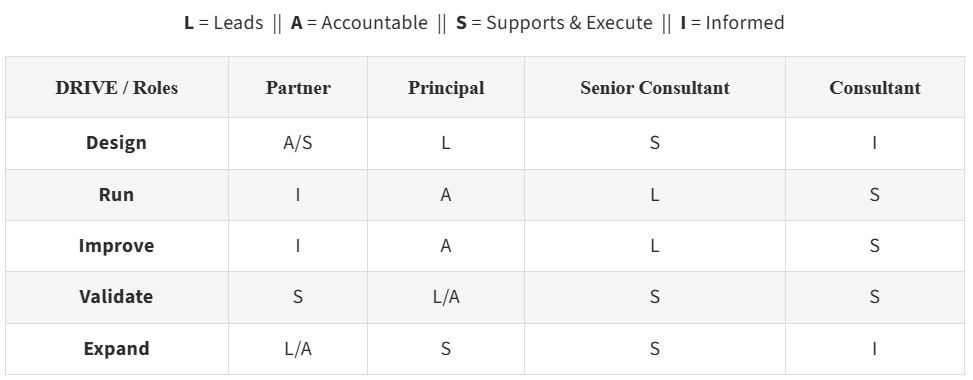
DRIVE™ × ORBIT™: RACI by phase
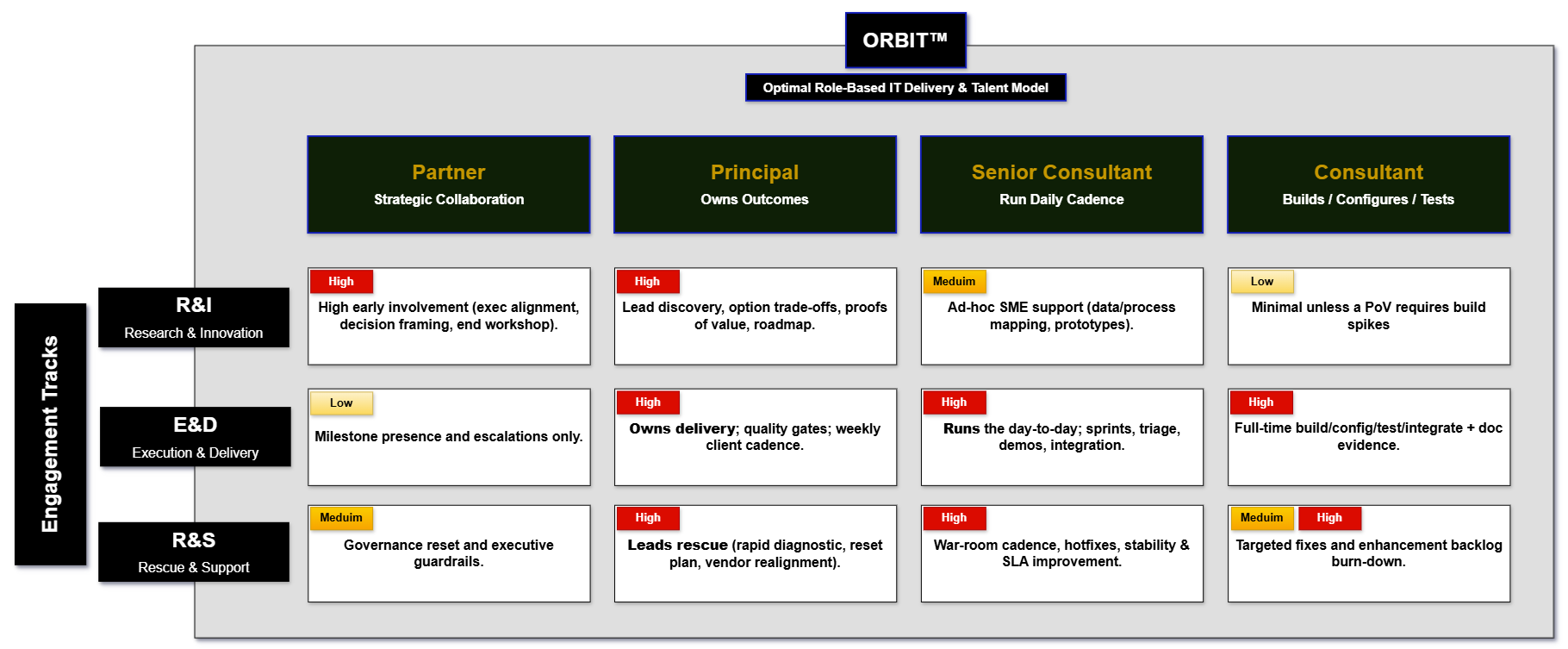
Engagement tracks — who leans in (involvement heatmap)
AOS™
Execution with Structure. Expertise with Purpose.
Averroa Operating System™ is the engine behind everything we deliver. It fuses two proprietary frameworks — DRIVE™ and ORBIT™ — into a cohesive system that transforms strategy into measurable execution.
DRIVE™ is the rhythm: a five-phase loop (Design → Run → Improve → Validate → Expand) that structures every engagement into a clear, feedback-driven journey. It brings discipline, speed, and adaptability to even the most complex programs.
ORBIT™ is the machine: a structured, tiered model of senior experts and full-time consultants who execute each phase with precision. Every role is mapped to where it creates the most impact — from partners at initiation to consultants deep in delivery.
Together, they form a closed-loop delivery system that gives clients transparency, momentum, and results. Whether you’re launching an AI pilot, digitizing a supply chain, or building a PMO, the Averroa Operating System™ ensures the right expertise is applied at the right time — every time.
DRIVE™ is the what & when: a five-phase execution loop: Design → Run → Improve → Validate → Expand. It is how we move work from idea to scaled value.
ORBIT™ is the who & how: a tiered talent model that applies the right altitude of expertise (Partner / Principal / Senior Consultant / Consultant) at the right moment.
Core principles
- Benefit acceptance, not activity acceptance. Success is verified against business KPIs in Validate, not just “tasks done.”
- Altitude-based timeboxing. Partners show up at milestones/escalations; Principals own outcomes daily; Seniors run the cadence; Consultants build. This is surgical senior attention—no “senior tourism.”
- One rhythm across all tracks. Weekly steering, bi-weekly demos, monthly value reviews; the same quality gates and artefacts from R&I to Rescue.
- Elastic, vetted bench. The Principal assembles just-in-time skills from the TalentHub—speed without bloat.
DRIVE™ × ORBIT™: RACI by phase
Engagement tracks — who leans in (involvement heatmap)
Check out how this operating system goes in action
Check out how this operating system goes in action
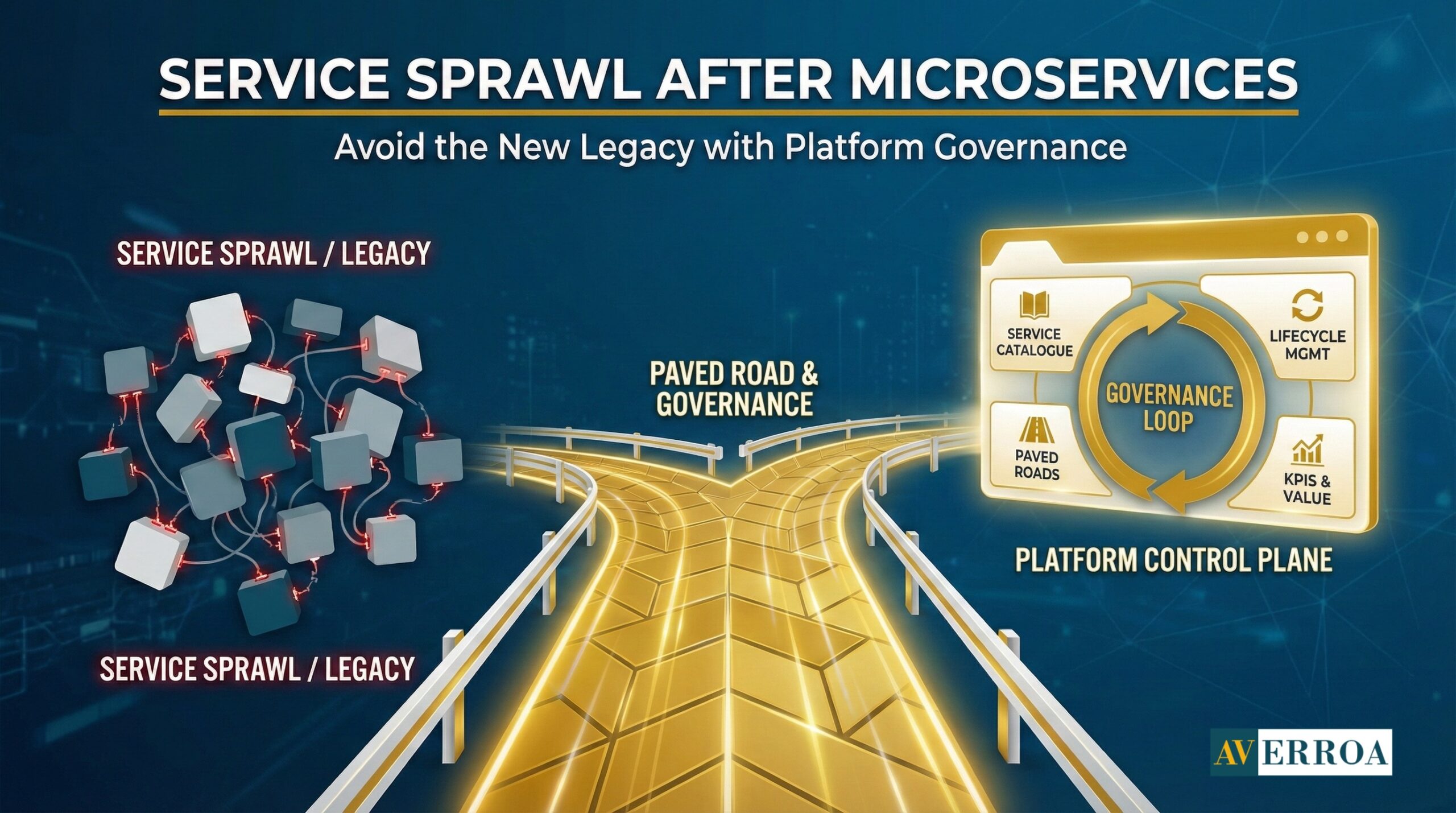
Most organizations worry about the migration itself. The quieter risk arrives 12 to 24 months later: service sprawl. Teams keep shipping services, the catalogue grows, ownership blurs, and the platform becomes harder to change than the monolith it replaced. That is how microservices become the new legacy.
Most organizations worry about the migration itself. The quieter risk arrives 12 to 24 months later: service sprawl. Teams keep shipping services, the catalogue grows, ownership blurs, and the platform becomes harder to change than the monolith it replaced. That is how microservices become the new legacy.
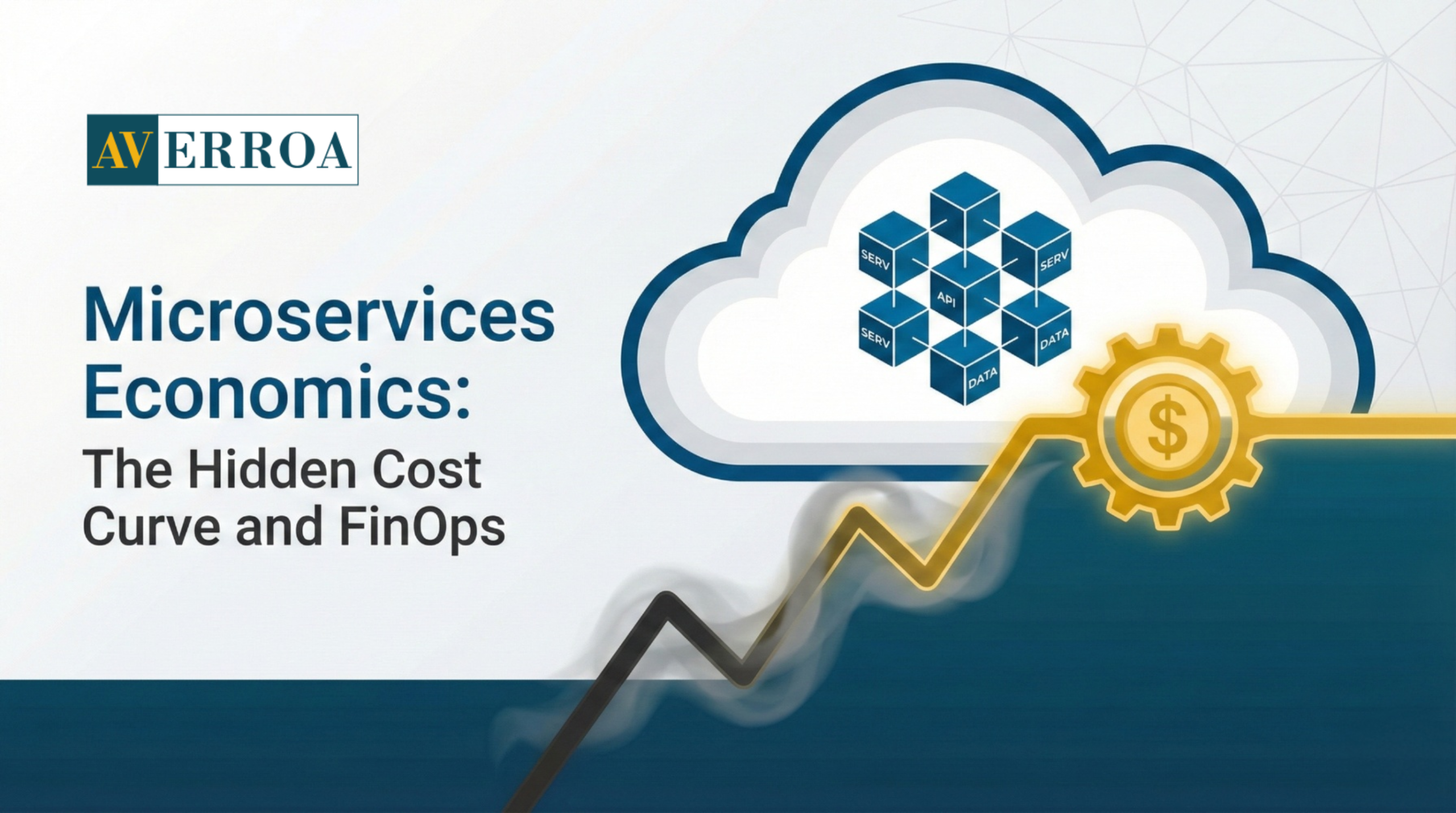
Microservices economics is where many enterprise migrations either earn trust or lose it. The architecture may be “modern”, but the bill, the latency, and the on call load often move in the wrong direction first. That is not a surprise. It is the default outcome when you increase the number of deployable units, duplicate data, add telemetry, and run legacy and new in parallel.
Microservices economics is where many enterprise migrations either earn trust or lose it. The architecture may be “modern”, but the bill, the latency, and the on call load often move in the wrong direction first. That is not a surprise. It is the default outcome when you increase the number of deployable units, duplicate data, add telemetry, and run legacy and new in parallel.
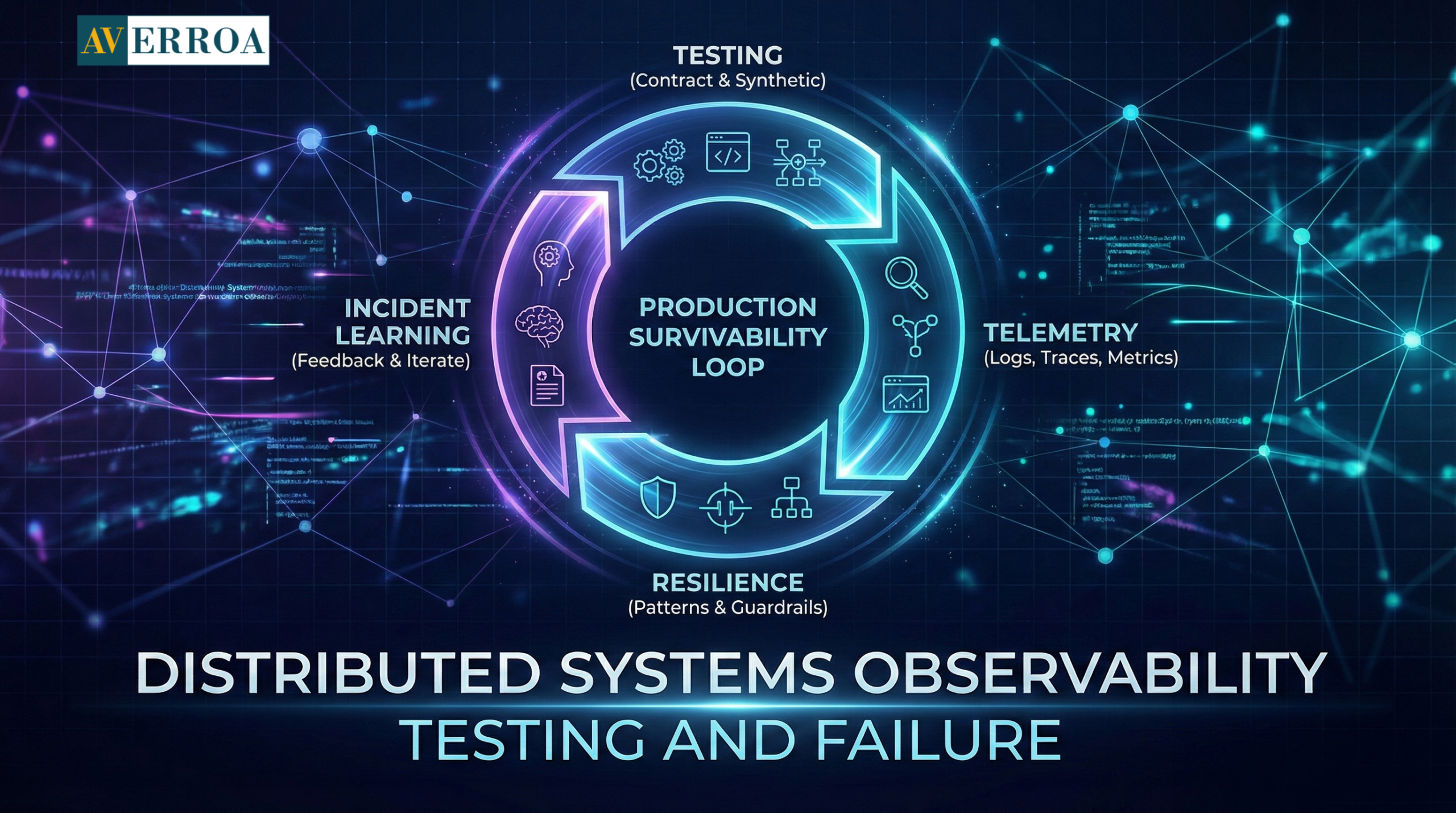
Most migrations succeed in a demo environment and fail in production. The reason is predictable: distributed systems do not fail like monoliths. They fail partially, they fail silently, and they fail in ways that look like “slow” rather than “down”. That is why distributed systems observability is now a board level capability, not an engineering nice to have.
Most migrations succeed in a demo environment and fail in production. The reason is predictable: distributed systems do not fail like monoliths. They fail partially, they fail silently, and they fail in ways that look like “slow” rather than “down”. That is why distributed systems observability is now a board level capability, not an engineering nice to have.
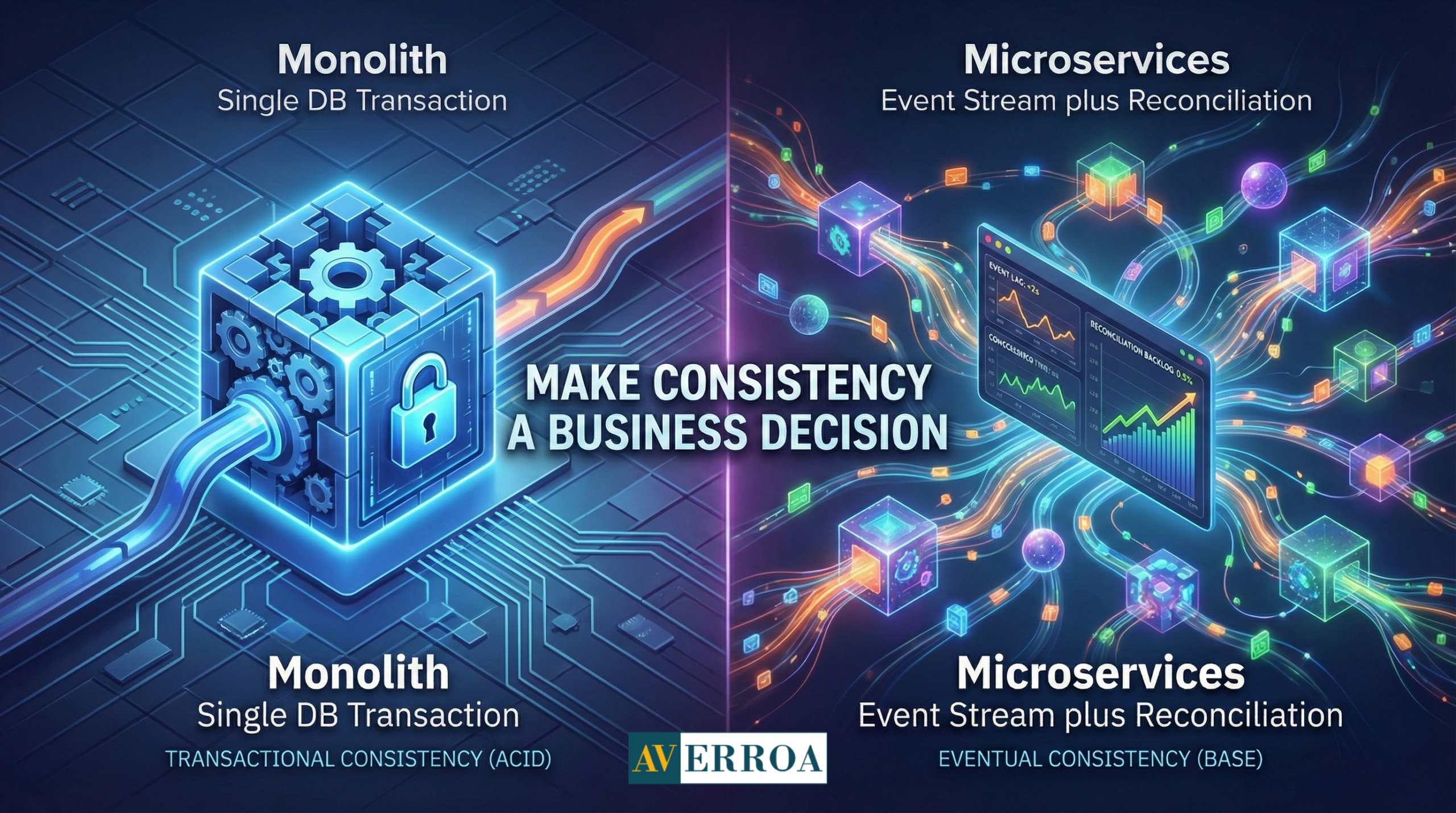
If you are migrating from a monolith to microservices, the hard part is not the APIs or the containers. It is the data. Specifically, it is how you maintain trust in your numbers when you no longer have one database, one transaction boundary, and one place to “just fix it”.
If you are migrating from a monolith to microservices, the hard part is not the APIs or the containers. It is the data. Specifically, it is how you maintain trust in your numbers when you no longer have one database, one transaction boundary, and one place to “just fix it”.
Where strategy meets execution …
Unlock Smart Execution with Elite Consulting Expertise
Start Your Journey or Business Expansion Today!
At Averroa, we deliver precision, clarity, and momentum across your most critical transformation projects — from supply chain digitization to AI integration and enterprise automation.
Where strategy meets execution …
Unlock Smart Execution with Elite Consulting Expertise
Start Your Journey or Business Expansion Today!
At Averroa, we deliver precision, clarity, and momentum across your most critical transformation projects — from supply chain digitization to AI integration and enterprise automation.
Why Averroa Stands Out
Partnering with Averroa means working with senior experts who deliver clarity, speed, and high-impact execution. We don’t just advise — we lead, integrate, and deliver with a focus on real business outcomes.