DRIVE ™
DRIVE™ by Averroa: From Insight to Impact — Delivered.
The Averroa DRIVE™ Framework is our proprietary method for delivering high-impact consulting engagements with speed, clarity, and accountability. It reflects not only how we structure projects — but how we think: execution-first, data-informed, and growth-ready.
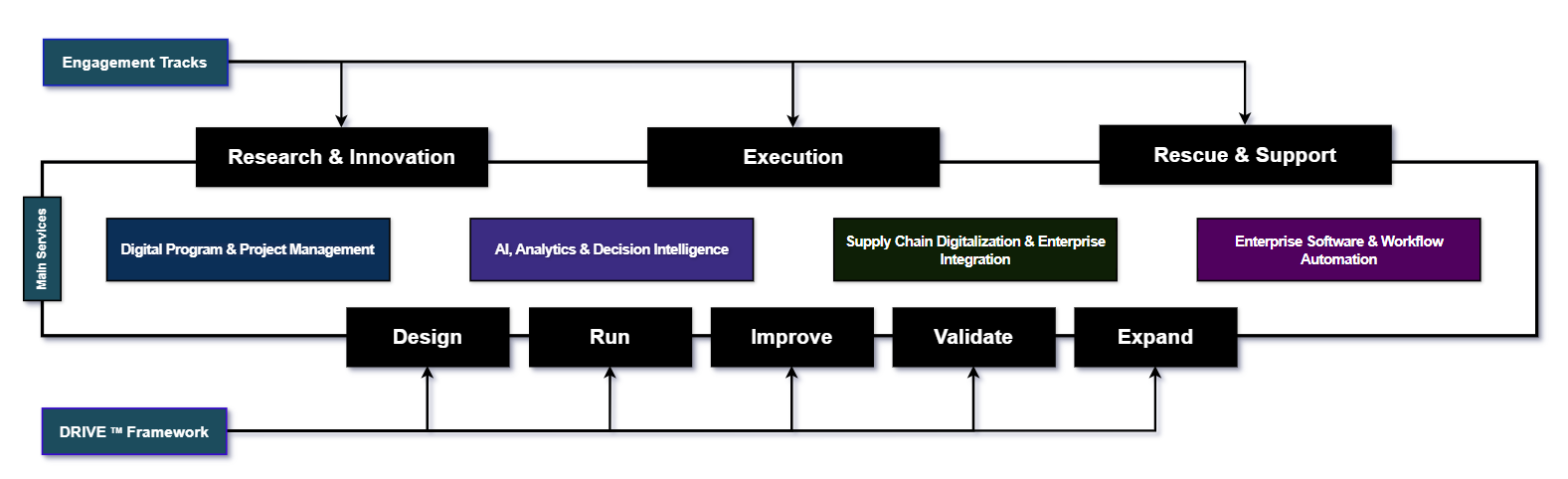
DRIVE™ stands for Design – Run – Improve – Validate – Expand — a five-phase operating loop that underpins every Averroa engagement. Unlike linear methods, DRIVE™ is iterative, modular, and focused on creating a continuous rhythm of progress and feedback. It’s how we bridge the gap between strategy and real-world execution.

Averroa DRIVE™ Framework
- In the Design phase, we clarify business needs, map opportunities, and architect the right solution — whether it’s an AI model, a workflow, or a supply chain roadmap.
- During Run, we execute hands-on — building tools, integrating systems, launching programs, and coordinating stakeholders.
- The Improve phase focuses on real-time optimization: resolving friction, analyzing data, and refining delivery.
- In Validate, we measure performance against outcomes and strategic KPIs — not just activity metrics.
- Finally, Expand scales success across teams, geographies, or functions — ensuring continuity and long-term value.
This framework allows us to stay agile without sacrificing structure. It supports AI pilots, ERP integrations, custom app builds, and digital PMOs — all with a unified logic.
DRIVE™ is what makes Averroa different: not just smart thinking, but smart doing — with momentum, rhythm, and results you can measure.
How DRIVE™ Powers Our Services
✨ Digital Program & Project Management
- Design the PMO model and governance structures
- Run the workstreams and coordination mechanisms
- Improve delivery cadence and remove roadblocks
- Validate stakeholder engagement and milestone accuracy
- Expand to other programs and teams
⚙️ Enterprise Software & Workflow Automation
- Design the process logic and user flow
- Run low-code apps, SharePoint solutions, or integrations
- Improve UX and backend performance
- Validate time saved, errors reduced, and adoption
- Expand to adjacent workflows or business units
🚚 Supply Chain Digitalization & Integration
- Design the transformation roadmap (SAP, OMP, VIM)
- Run the implementation, integration, and training
- Improve planning, procurement, and master data flows
- Validate key metrics (e.g., OTIF, forecast accuracy)
- Expand digitization to suppliers, geographies, and new functions
🧰 AI, Analytics & Decision Intelligence
- Design the use case architecture and data model
- Run the ML models, BI dashboards, or analytics pilots
- Improve forecast accuracy and data reliability
- Validate uplift, bias reduction, and business impact
- Expand across functions and embed into core decisions
Discover more about how DRIVE Framework is injected into Averroa projects
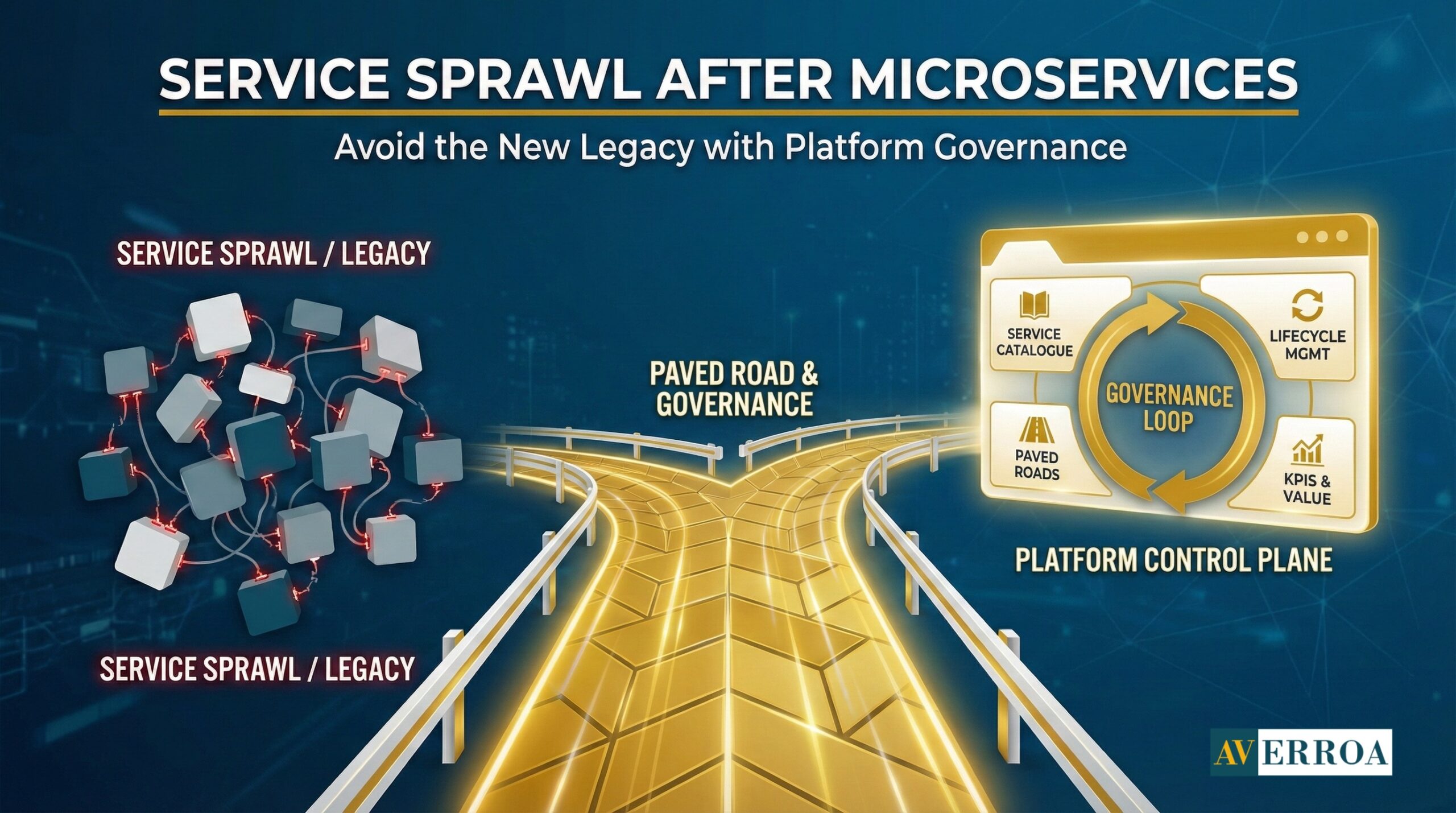
Most organizations worry about the migration itself. The quieter risk arrives 12 to 24 months later: service sprawl. Teams keep shipping services, the catalogue grows, ownership blurs, and the platform becomes harder to change than the monolith it replaced. That is how microservices become the new legacy.
Most organizations worry about the migration itself. The quieter risk arrives 12 to 24 months later: service sprawl. Teams keep shipping services, the catalogue grows, ownership blurs, and the platform becomes harder to change than the monolith it replaced. That is how microservices become the new legacy.
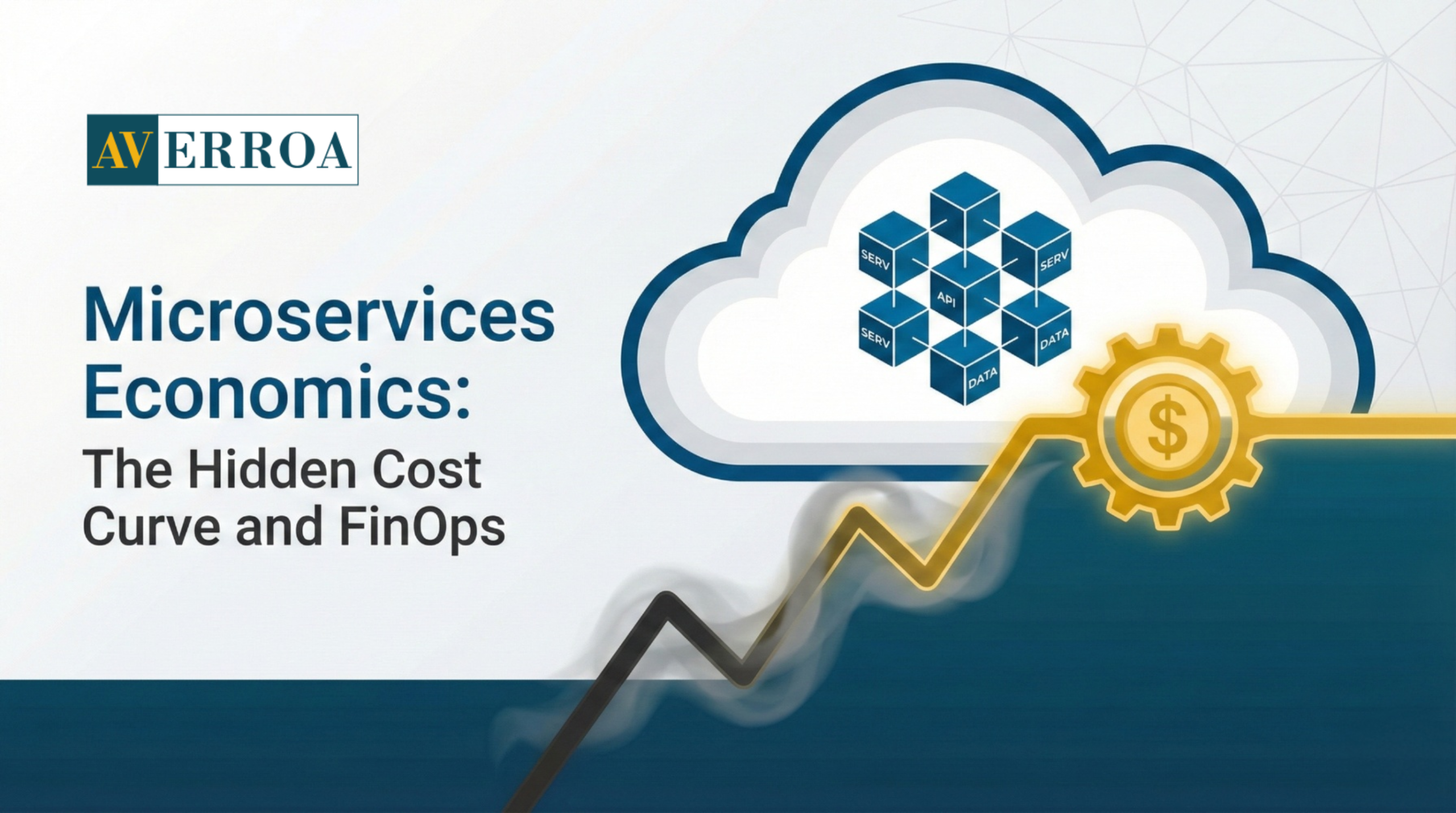
Microservices economics is where many enterprise migrations either earn trust or lose it. The architecture may be “modern”, but the bill, the latency, and the on call load often move in the wrong direction first. That is not a surprise. It is the default outcome when you increase the number of deployable units, duplicate data, add telemetry, and run legacy and new in parallel.
Microservices economics is where many enterprise migrations either earn trust or lose it. The architecture may be “modern”, but the bill, the latency, and the on call load often move in the wrong direction first. That is not a surprise. It is the default outcome when you increase the number of deployable units, duplicate data, add telemetry, and run legacy and new in parallel.
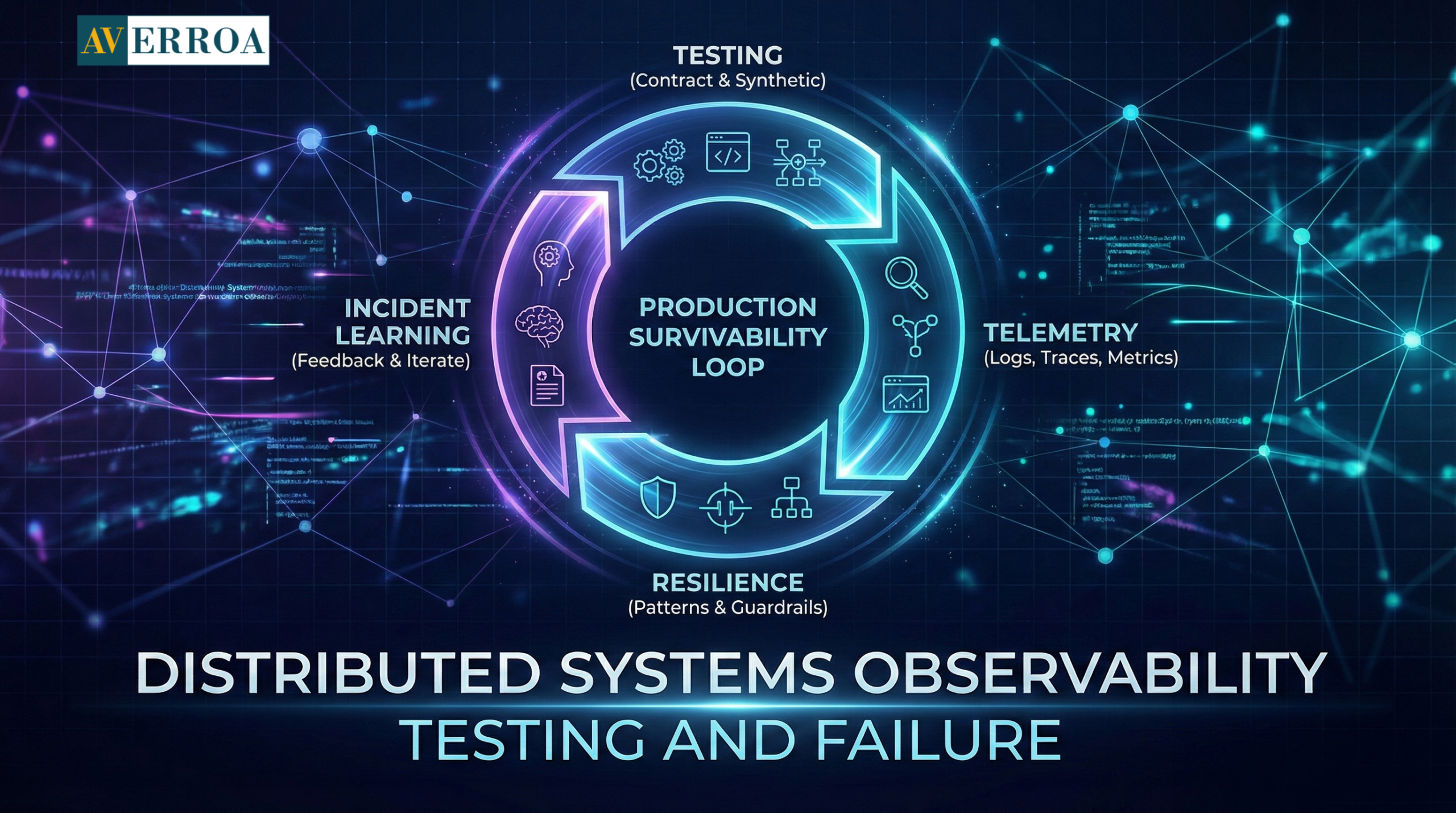
Most migrations succeed in a demo environment and fail in production. The reason is predictable: distributed systems do not fail like monoliths. They fail partially, they fail silently, and they fail in ways that look like “slow” rather than “down”. That is why distributed systems observability is now a board level capability, not an engineering nice to have.
Most migrations succeed in a demo environment and fail in production. The reason is predictable: distributed systems do not fail like monoliths. They fail partially, they fail silently, and they fail in ways that look like “slow” rather than “down”. That is why distributed systems observability is now a board level capability, not an engineering nice to have.
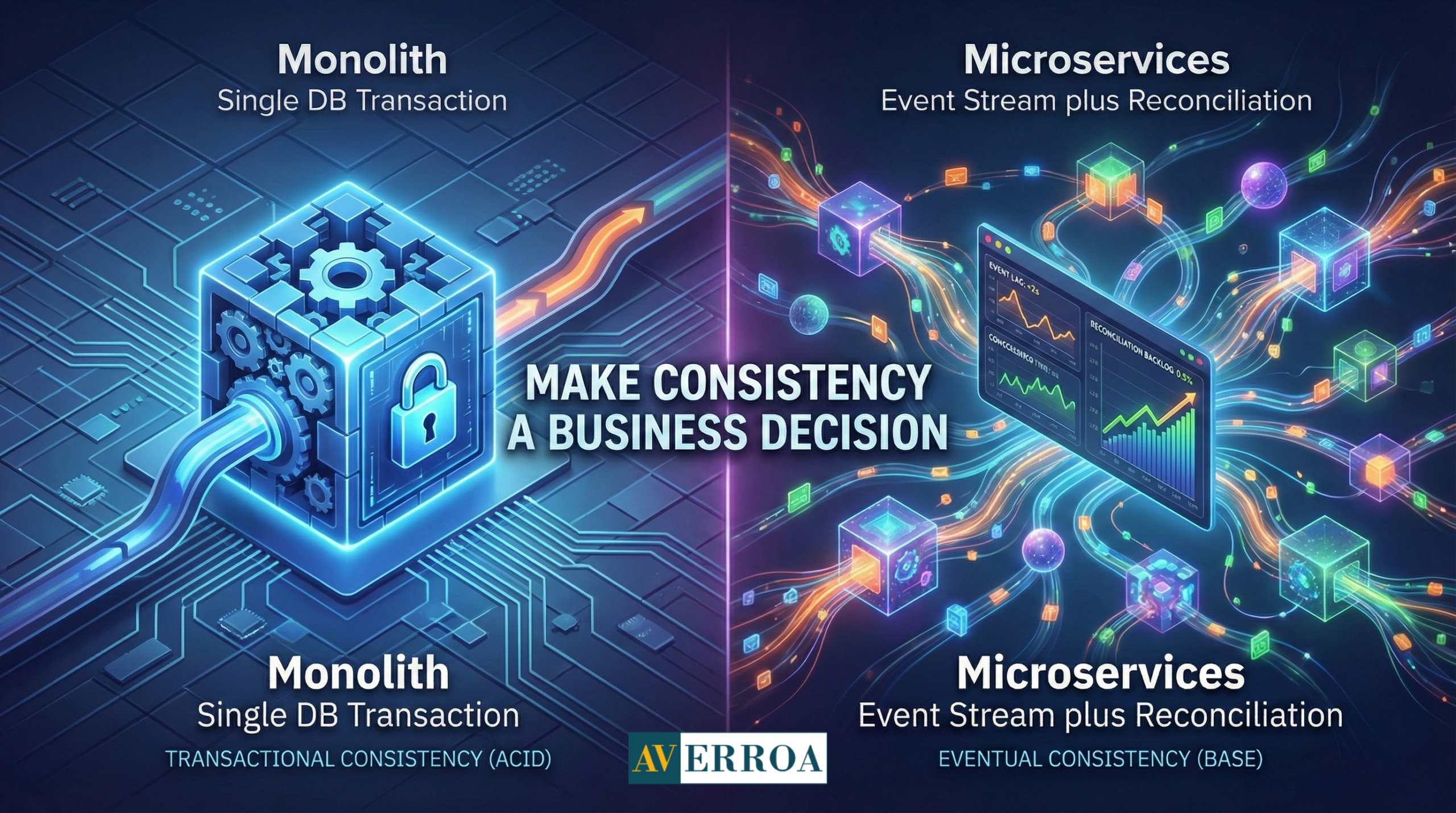
If you are migrating from a monolith to microservices, the hard part is not the APIs or the containers. It is the data. Specifically, it is how you maintain trust in your numbers when you no longer have one database, one transaction boundary, and one place to “just fix it”.
If you are migrating from a monolith to microservices, the hard part is not the APIs or the containers. It is the data. Specifically, it is how you maintain trust in your numbers when you no longer have one database, one transaction boundary, and one place to “just fix it”.
DRIVE ™
DRIVE™ by Averroa: From Insight to Impact — Delivered.
The Averroa DRIVE™ Framework is our proprietary method for delivering high-impact consulting engagements with speed, clarity, and accountability. It reflects not only how we structure projects — but how we think: execution-first, data-informed, and growth-ready.
DRIVE™ stands for Design – Run – Improve – Validate – Expand — a five-phase operating loop that underpins every Averroa engagement. Unlike linear methods, DRIVE™ is iterative, modular, and focused on creating a continuous rhythm of progress and feedback. It’s how we bridge the gap between strategy and real-world execution.
Averroa DRIVE™ Framework
- In the Design phase, we clarify business needs, map opportunities, and architect the right solution — whether it’s an AI model, a workflow, or a supply chain roadmap.
- During Run, we execute hands-on — building tools, integrating systems, launching programs, and coordinating stakeholders.
- The Improve phase focuses on real-time optimization: resolving friction, analyzing data, and refining delivery.
- In Validate, we measure performance against outcomes and strategic KPIs — not just activity metrics.
- Finally, Expand scales success across teams, geographies, or functions — ensuring continuity and long-term value.
This framework allows us to stay agile without sacrificing structure. It supports AI pilots, ERP integrations, custom app builds, and digital PMOs — all with a unified logic.
DRIVE™ is what makes Averroa different: not just smart thinking, but smart doing — with momentum, rhythm, and results you can measure.
How DRIVE™ Powers Our Services
✨ Digital Program & Project Management
- Design the PMO model and governance structures
- Run the workstreams and coordination mechanisms
- Improve delivery cadence and remove roadblocks
- Validate stakeholder engagement and milestone accuracy
- Expand to other programs and teams
⚙️ Enterprise Software & Workflow Automation
- Design the process logic and user flow
- Run low-code apps, SharePoint solutions, or integrations
- Improve UX and backend performance
- Validate time saved, errors reduced, and adoption
- Expand to adjacent workflows or business units
🚚 Supply Chain Digitalization & Integration
- Design the transformation roadmap (SAP, OMP, VIM)
- Run the implementation, integration, and training
- Improve planning, procurement, and master data flows
- Validate key metrics (e.g., OTIF, forecast accuracy)
- Expand digitization to suppliers, geographies, and new functions
🧰 AI, Analytics & Decision Intelligence
- Design the use case architecture and data model
- Run the ML models, BI dashboards, or analytics pilots
- Improve forecast accuracy and data reliability
- Validate uplift, bias reduction, and business impact
- Expand across functions and embed into core decisions
Discover more about how DRIVE Framework is injected into Averroa projects
Most organizations worry about the migration itself. The quieter risk arrives 12 to 24 months later: service sprawl. Teams keep shipping services, the catalogue grows, ownership blurs, and the platform becomes harder to change than the monolith it replaced. That is how microservices become the new legacy.
Most organizations worry about the migration itself. The quieter risk arrives 12 to 24 months later: service sprawl. Teams keep shipping services, the catalogue grows, ownership blurs, and the platform becomes harder to change than the monolith it replaced. That is how microservices become the new legacy.
Microservices economics is where many enterprise migrations either earn trust or lose it. The architecture may be “modern”, but the bill, the latency, and the on call load often move in the wrong direction first. That is not a surprise. It is the default outcome when you increase the number of deployable units, duplicate data, add telemetry, and run legacy and new in parallel.
Microservices economics is where many enterprise migrations either earn trust or lose it. The architecture may be “modern”, but the bill, the latency, and the on call load often move in the wrong direction first. That is not a surprise. It is the default outcome when you increase the number of deployable units, duplicate data, add telemetry, and run legacy and new in parallel.
Most migrations succeed in a demo environment and fail in production. The reason is predictable: distributed systems do not fail like monoliths. They fail partially, they fail silently, and they fail in ways that look like “slow” rather than “down”. That is why distributed systems observability is now a board level capability, not an engineering nice to have.
Most migrations succeed in a demo environment and fail in production. The reason is predictable: distributed systems do not fail like monoliths. They fail partially, they fail silently, and they fail in ways that look like “slow” rather than “down”. That is why distributed systems observability is now a board level capability, not an engineering nice to have.
If you are migrating from a monolith to microservices, the hard part is not the APIs or the containers. It is the data. Specifically, it is how you maintain trust in your numbers when you no longer have one database, one transaction boundary, and one place to “just fix it”.
If you are migrating from a monolith to microservices, the hard part is not the APIs or the containers. It is the data. Specifically, it is how you maintain trust in your numbers when you no longer have one database, one transaction boundary, and one place to “just fix it”.
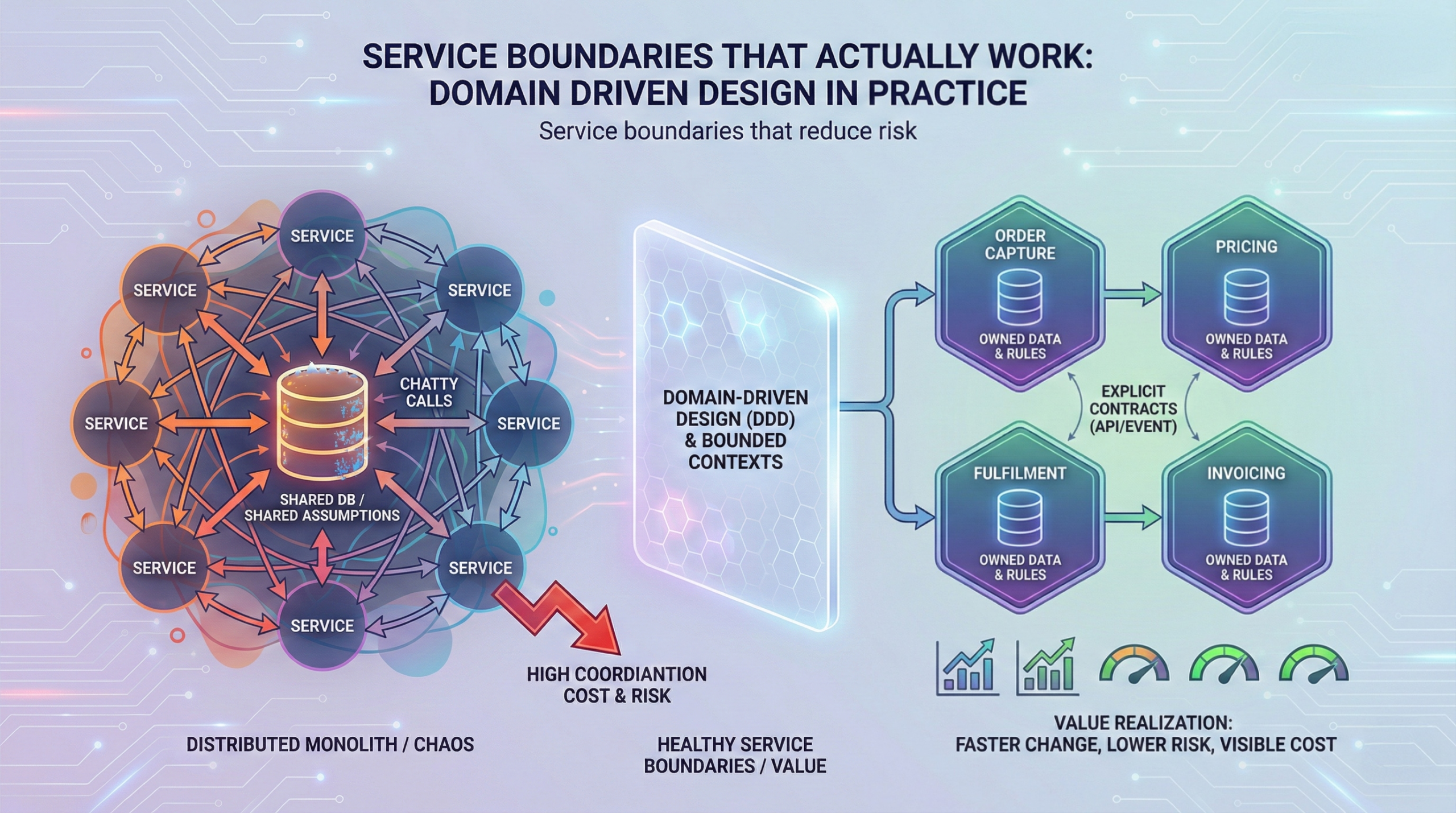
If your microservices programme disappoints, the root cause is often not Kubernetes, CI/CD, or cloud cost. It is service boundaries that do not match how the business actually works. When you slice a monolith the wrong way, you create a distributed monolith: more deployments, more integrations, and more incidents, with little agility to show for it.
If your microservices programme disappoints, the root cause is often not Kubernetes, CI/CD, or cloud cost. It is service boundaries that do not match how the business actually works. When you slice a monolith the wrong way, you create a distributed monolith: more deployments, more integrations, and more incidents, with little agility to show for it.
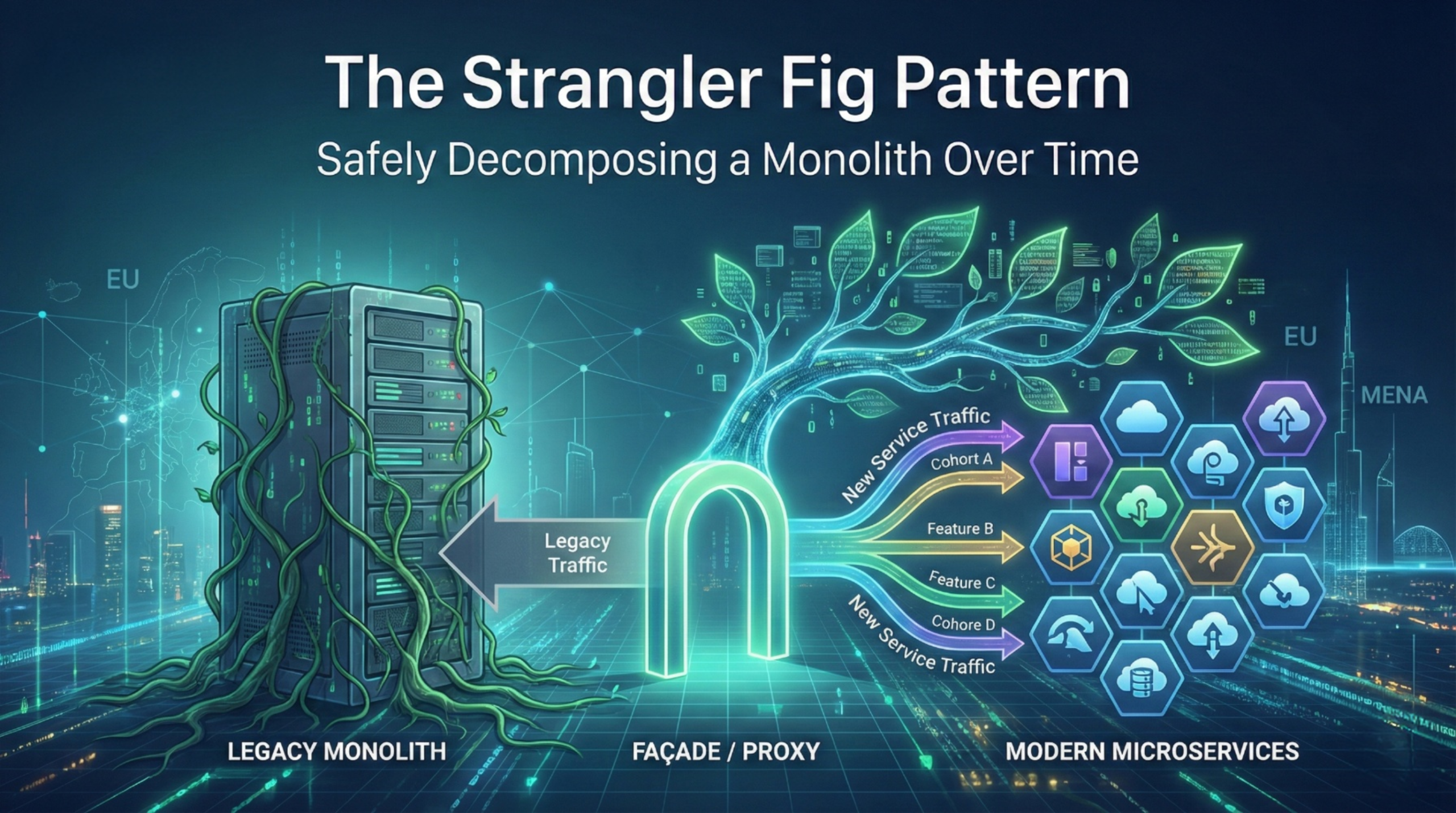
The strangler fig pattern has become the default migration play for a reason. It lets enterprises modernise without betting the business on a big bang cutover. That matters now because most organisations are under pressure to deliver faster while costs and risk are moving in the opposite direction.
The strangler fig pattern has become the default migration play for a reason. It lets enterprises modernise without betting the business on a big bang cutover. That matters now because most organisations are under pressure to deliver faster while costs and risk are moving in the opposite direction.
Agility Beyond IT shows how any team can deliver value faster through visibility, feedback loops, and adaptive decision making without adding chaos.
Agility Beyond IT shows how any team can deliver value faster through visibility, feedback loops, and adaptive decision making without adding chaos.
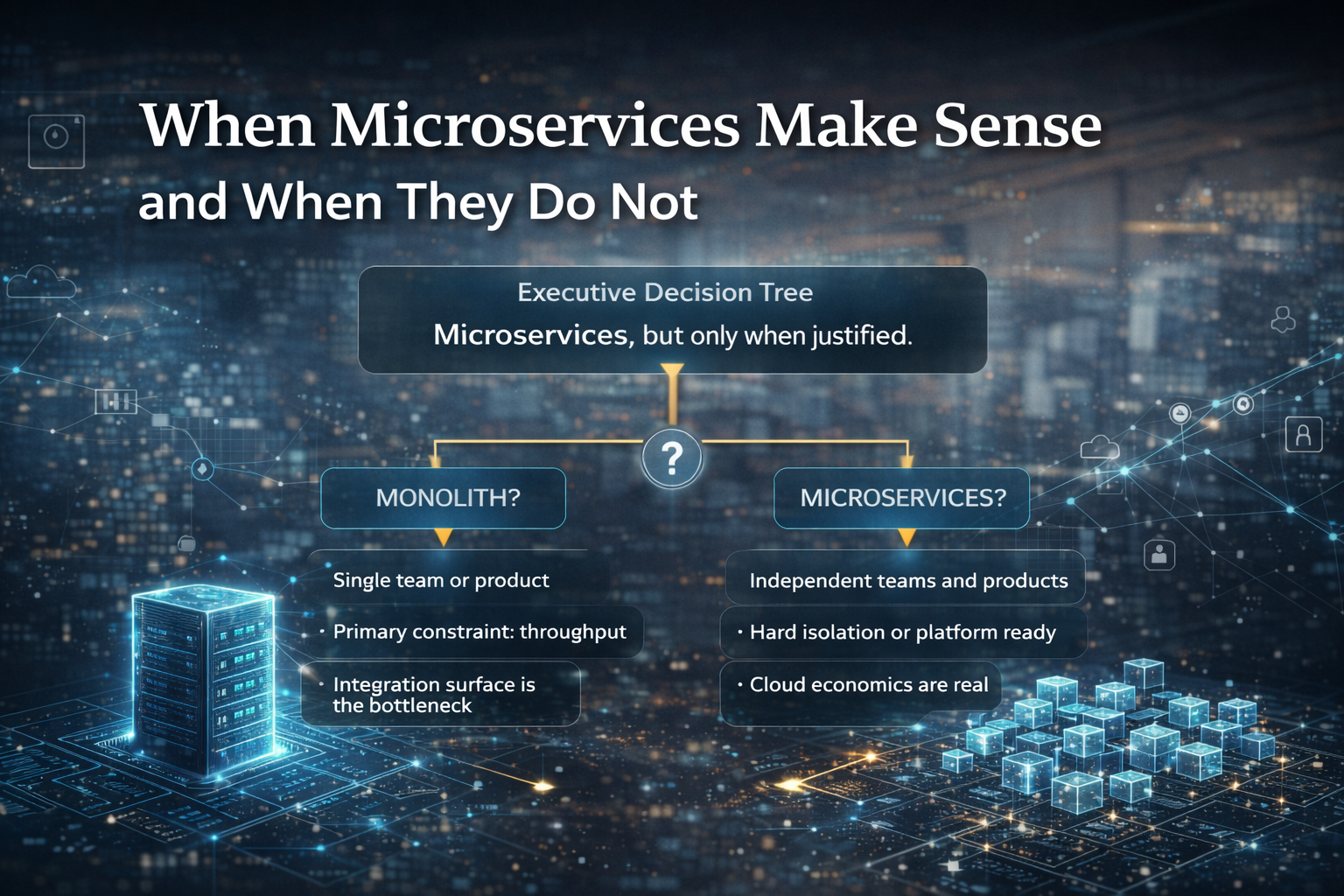
“Move to microservices” has become a default recommendation in many enterprise roadmaps. In practice, the monolith vs microservices decision is not a style choice. It is a capital allocation decision with operational consequences.
“Move to microservices” has become a default recommendation in many enterprise roadmaps. In practice, the monolith vs microservices decision is not a style choice. It is a capital allocation decision with operational consequences.
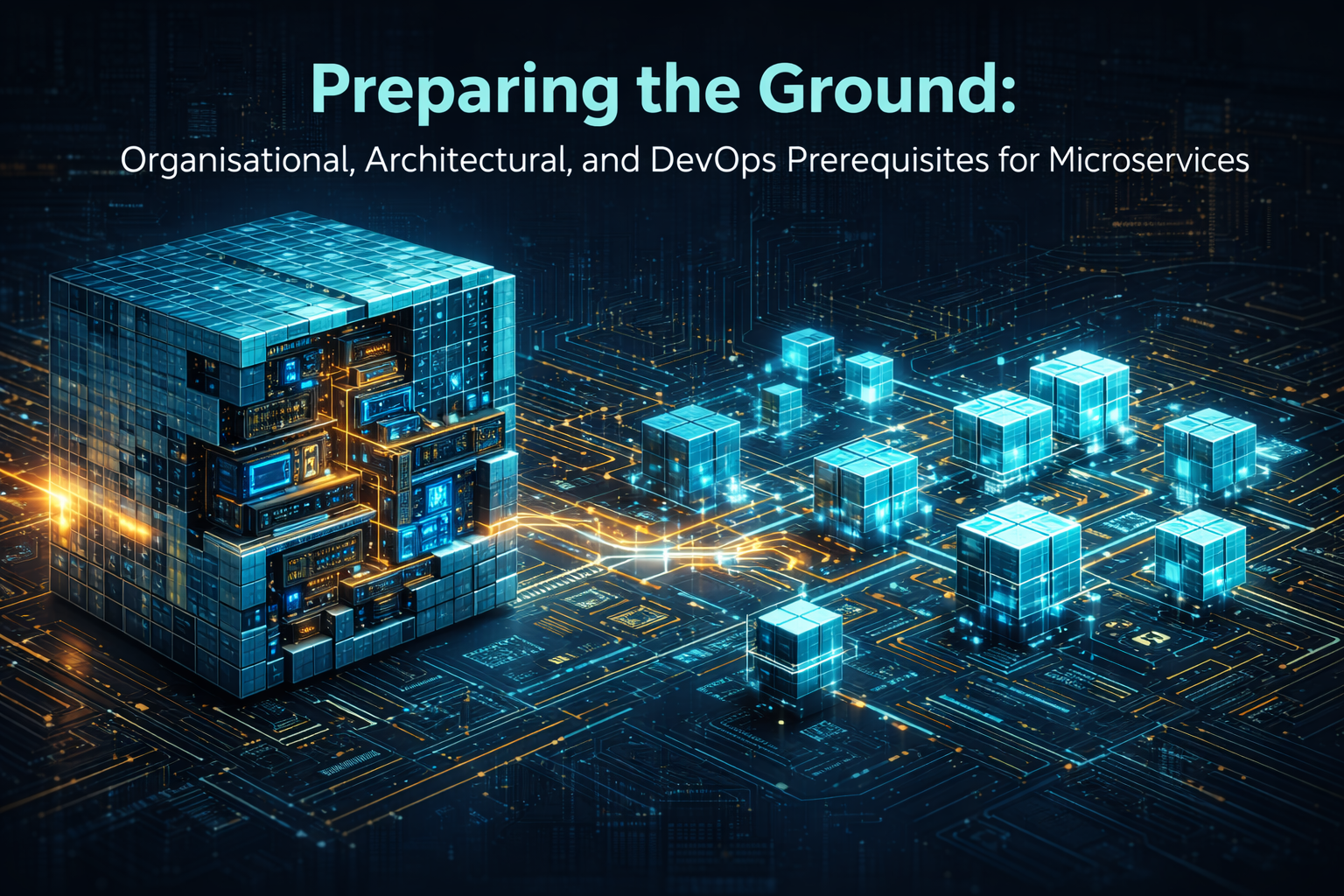
Most microservices programmes fail before the first service is extracted. The root cause is not the code. It is missing microservices prerequisites across delivery, ownership, and operational control. The market has moved to cloud native at scale, but readiness is uneven.
Most microservices programmes fail before the first service is extracted. The root cause is not the code. It is missing microservices prerequisites across delivery, ownership, and operational control. The market has moved to cloud native at scale, but readiness is uneven.

A decade ago, “microservices” was a specialist conversation. Today it is board relevant because the delivery and risk envelope has changed. Cloud native adoption is now mainstream in Europe, while adoption in the Middle East and Africa is accelerating from a lower base. In the CNCF Annual Survey 2024, 92% of European respondents report at least some cloud native application development and deployment, compared with 66% in the Middle East and Africa.
A decade ago, “microservices” was a specialist conversation. Today it is board relevant because the delivery and risk envelope has changed. Cloud native adoption is now mainstream in Europe, while adoption in the Middle East and Africa is accelerating from a lower base. In the CNCF Annual Survey 2024, 92% of European respondents report at least some cloud native application development and deployment, compared with 66% in the Middle East and Africa.

A pragmatic, enterprise grade guide to migrating from monoliths to microservices. Decision criteria, prerequisites, Strangler Fig migration, service boundaries, data consistency, operations, cost economics, and long term governance.
A pragmatic, enterprise grade guide to migrating from monoliths to microservices. Decision criteria, prerequisites, Strangler Fig migration, service boundaries, data consistency, operations, cost economics, and long term governance.
Where strategy meets execution …
Unlock Smart Execution with Elite Consulting Expertise
Start Your Journey or Business Expansion Today!
At Averroa, we deliver precision, clarity, and momentum across your most critical transformation projects — from supply chain digitization to AI integration and enterprise automation.
Where strategy meets execution …
Unlock Smart Execution with Elite Consulting Expertise
Unlock Smart Execution with Elite Consulting Expertise
At Averroa, we deliver precision, clarity, and momentum across your most critical transformation projects — from supply chain digitization to AI integration and enterprise automation.
Why Averroa Stands Out
Partnering with Averroa means working with senior experts who deliver clarity, speed, and high-impact execution. We don’t just advise — we lead, integrate, and deliver with a focus on real business outcomes.